
The homeowner guide to roofs
Materials, ventilation, lifespan, warranties and how to read a bid. Written so you can judge any contractor, including us.
Know your roof — every covering and every manufacturer product line, with wind, fire, impact and warranty detail for both markets. And what insurance non-renewals mean for your roof.
Choosing a shingle
Almost every Milwaukee home uses asphalt shingles, and within that there are three practical choices. The gap between them is usually smaller than homeowners expect, and it is the one part of the quote you fully control.
| Type | What it is, and who it suits |
|---|---|
| Three tab | The old flat single-layer shingle. Cheapest, lightest, shortest life, and increasingly rare on new work. Worth considering only on a property you are about to sell, and even then the saving is small. |
| Architectural | Dimensional, two layers laminated together, better wind rating and a deeper look. This is the standard for good reason and what most homes should have. |
| Impact rated (Class 4) | Built to resist hail bruising. Costs more, and many insurers discount the premium, which can repay the difference over the roof's life in a hail-prone area. |
| Impact rated (Class 4) | Worth considering for monsoon debris and the hail the valley does occasionally get. Many insurers discount the premium, so ask your agent before you decide. |
| Concrete and clay tile | The valley default, and for good reason. Tile shrugs off ultraviolet in a way asphalt cannot and can last fifty years. Remember that the tile is the rain screen and the underlayment beneath it is the actual waterproofing, so the underlayment is what you will eventually replace. |
| Designer profile | Heavier shingles imitating slate or shake. Chosen for appearance rather than performance, and worth it on the right house. |
Ventilation, which matters more than the shingle
A roof needs to breathe. Air should enter low at the soffit and leave high at the ridge, moving continuously through the attic. When it does, the deck stays cool and dry. When it does not, two things happen and both are expensive.
- Summer. Attic temperatures climb far above outside air and cook the shingles from underneath. Most manufacturer warranties are void without adequate ventilation, which is a detail almost nobody reads.
- Winter. Warm moist air from the house rises into the attic, melts the snow on the roof above it, and that meltwater refreezes at the cold eave. That is an ice dam, and it is an insulation and ventilation failure being blamed on the roof.
- Summer, which is most of the year. A valley attic can pass 150 degrees. That heat cooks the shingle from underneath, ages the underlayment beneath tile, and pushes straight into your cooling bill. Most manufacturer warranties are void without adequate ventilation, which is a detail almost nobody reads.
- Monsoon season. Driving rain arrives horizontally rather than falling, so it finds any gap a still-air climate would forgive. Ventilation openings have to breathe without becoming an entry point, which is a detail cheap installs get wrong.
A ridge vent with blocked soffits cannot pull air from outside, so it pulls it from inside the house instead. The attic stays hot, the heating bill rises, and the roof still ages from underneath. Intake and exhaust have to be balanced to the roof area, and it is the first thing we check in an attic.
How long a roof lasts, and what shortens it
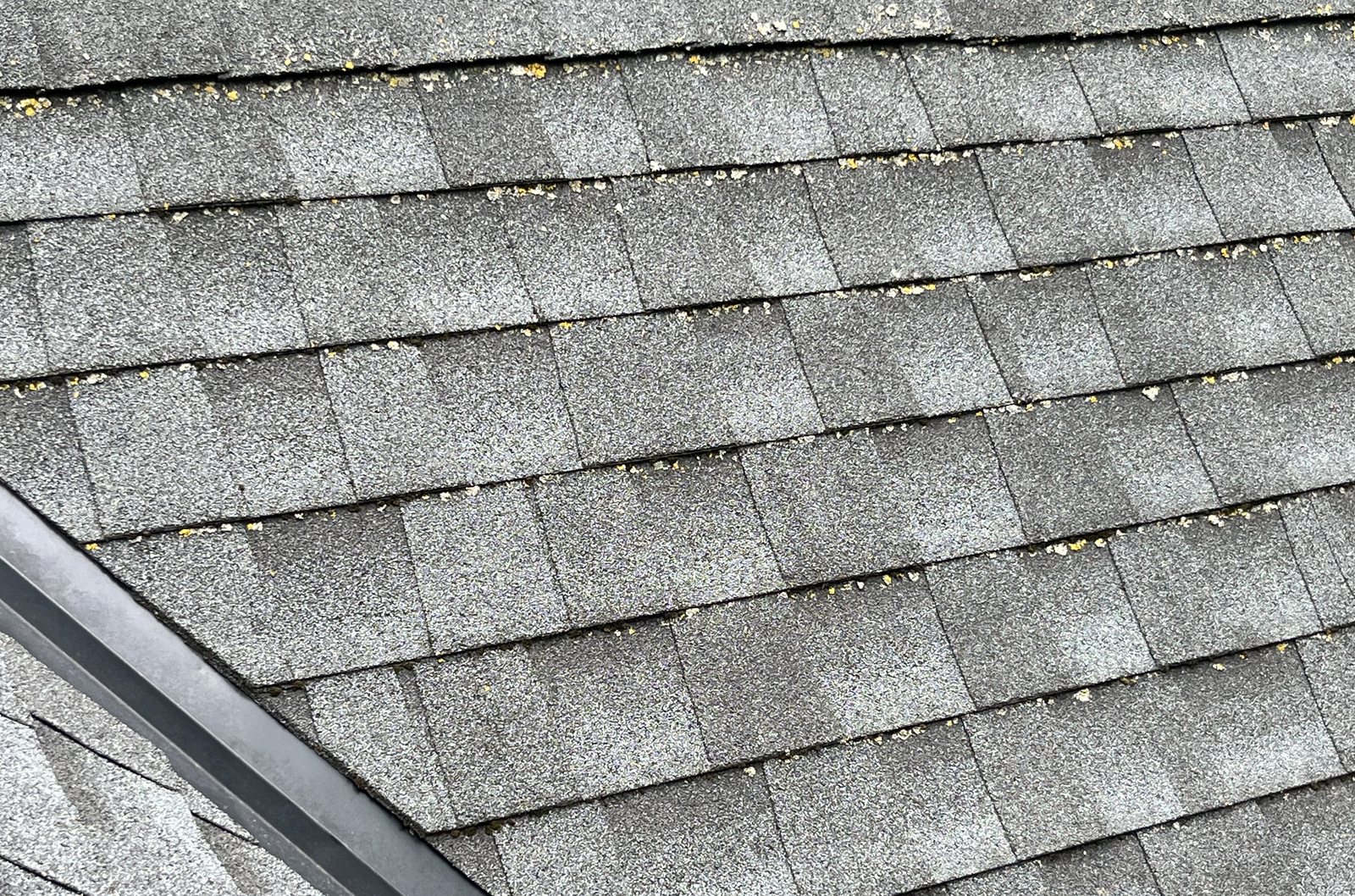
An architectural asphalt roof, correctly installed and properly ventilated, should give twenty to twenty five years in this climate. What takes years off it:
An architectural asphalt roof in the Phoenix valley should give fifteen to twenty years, which is less than the same shingle would give in a mild climate, because ultraviolet and heat do the aging here rather than freeze and thaw. Concrete tile lasts far longer, but the underlayment beneath it typically needs replacing at fifteen to twenty five years. What takes years off either:
- Inadequate ventilation, which is the single biggest factor.
- Installation over a soft or moving deck, so fasteners work loose.
- Overdriven or underdriven nails, which either cut the shingle or fail to hold it.
- Reused flashing, which leaks long before the field does.
- Tree cover holding moisture and dropping debris into valleys.
- A dark color on a low slope, which raises surface temperature further in a climate that is already punishing the shingle.
Warranties, and what they actually cover
| Manufacturer warranty | Covers defects in the shingle itself. It does not cover installation, and it is commonly voided by inadequate ventilation or by installation outside the printed instructions. |
| Workmanship warranty | Covers the installation, which is where the overwhelming majority of roof problems actually originate. Ours is fifteen years. |
| What neither covers | Storm damage, which is what your homeowner's policy is for, and failures caused by something else on the building, such as a chimney that needs tuckpointing. |
Reading three bids
Bids that look wildly different usually are not pricing the same work. Line them up and check these five things.
- Roof area in squares. If it is not stated, nobody measured.
- Ice and water shield. Described by where it goes, not just listed as present.
- Flashing. Itemized as new, or quietly assumed to be reused.
- Starter and ridge cap. Their own lines, or missing to make a total look better.
- Decking price. A per-sheet figure agreed before the roof is opened.
When you have those five, the bids become comparable. Often the highest one turns out to be the only one describing the whole job.
When to call somebody
- Granules collecting at the bottom of a downspout.
- Shingles that look dark or bruised in patches after a hailstorm.
- Any stain on a ceiling or an interior wall, even a small one that has stopped growing.
- Daylight visible in the attic, or damp sheathing on the underside.
- Ice building along the eave in winter.
- A roof over eighteen years old, simply so you know how long you have to plan.
Common questions
How long should an asphalt roof last?
A correctly installed and properly ventilated architectural roof gives twenty to twenty five years in Greater Milwaukee.A correctly installed and properly ventilated architectural roof gives fifteen to twenty years in the Phoenix valley, where ultraviolet does the aging. The same shingle over a hot, unventilated attic can fail in twelve anywhere. Ventilation is usually the difference, not the shingle.
Are impact rated shingles worth it?
In a hail-prone area, often yes. They resist bruising better and many insurers discount the premium for a Class 4 product, which can pay back the upgrade over the life of the roof. Ask your agent whether yours does before you decide.
What is the single most common installation mistake?
Reusing old flashing. Metal outlives one roof, not two, and a pinhole in a fifteen year old pipe boot under a brand new roof is a leak with a new warranty over the top of it.
Screens lie. We will mail you the real thing.
Pick up to four shingle colors and we will post you actual pieces. Free, no appointment, and nobody turns up at your door.
Ready for a straight answer on your roof?
Free inspection, a written scope, and a fixed price before work starts. We will tell you honestly if it can wait another season.