

Roof repair and leak diagnosis
Water rarely enters where it drips. Here is how leaks actually behave, the six places they usually start, and when a repair is the right answer.
The stain on your ceiling is the end of the journey, not the start
Water gets in through an opening, then travels. It runs along the underside of the sheathing, down a rafter, across the top of the ceiling drywall, and falls at the first low point. By the time you see it, it can be several feet from where it entered and on a different plane of the roof entirely.
That is why sealing the area above the stain so often fails. It treats the exit rather than the entry. Finding the entry means reading the path backwards, which usually starts in the attic rather than on the roof.
Where leaks actually start
| Location | What goes wrong |
|---|---|
| Step flashing | Where a roof meets a wall. It should be one piece per shingle course, woven in as the roof goes up. Long runs of continuous flashing, or flashing reused from the last roof, are the most common serious leak we find. |
| Pipe boots | The rubber collar around a plumbing vent. The rubber perishes in ten to fifteen years and cracks at the pipe. Cheap to replace, expensive to ignore. |
| Valleys | Where two roof planes meet, carrying the most water of any part of the roof. Debris packs in, holds moisture and works under the shingles. |
| Chimney counter flashing | Metal that should be let into a mortar joint and sealed. Surface-mounted flashing held on with caulk is a temporary fix that has usually been there for years. |
| Nail pops | A fastener backing out lifts the shingle above it and opens a hole. Common on roofs where the deck has moved or the nails were overdriven. |
| Ice dams | Not a roofing defect but an insulation and ventilation one. Heat escapes into the attic, melts snow up-slope, and the meltwater refreezes at the cold eave until it backs up under the shingles. |
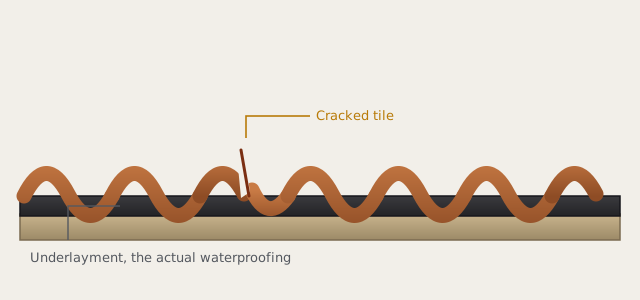
| Cracked or slipped tile | On a tile roof the tile is the rain screen and the underlayment is the waterproofing. A cracked or slipped tile lets sun and monsoon rain reach felt that was never meant to be exposed, and it fails quietly for years before anything shows inside. |
| Failed underlayment | The commonest tile roof problem in the valley. The tile can have decades left while the felt beneath it has gone brittle from heat. Replacing the underlayment and relaying the same tile is a full job, not a patch. |
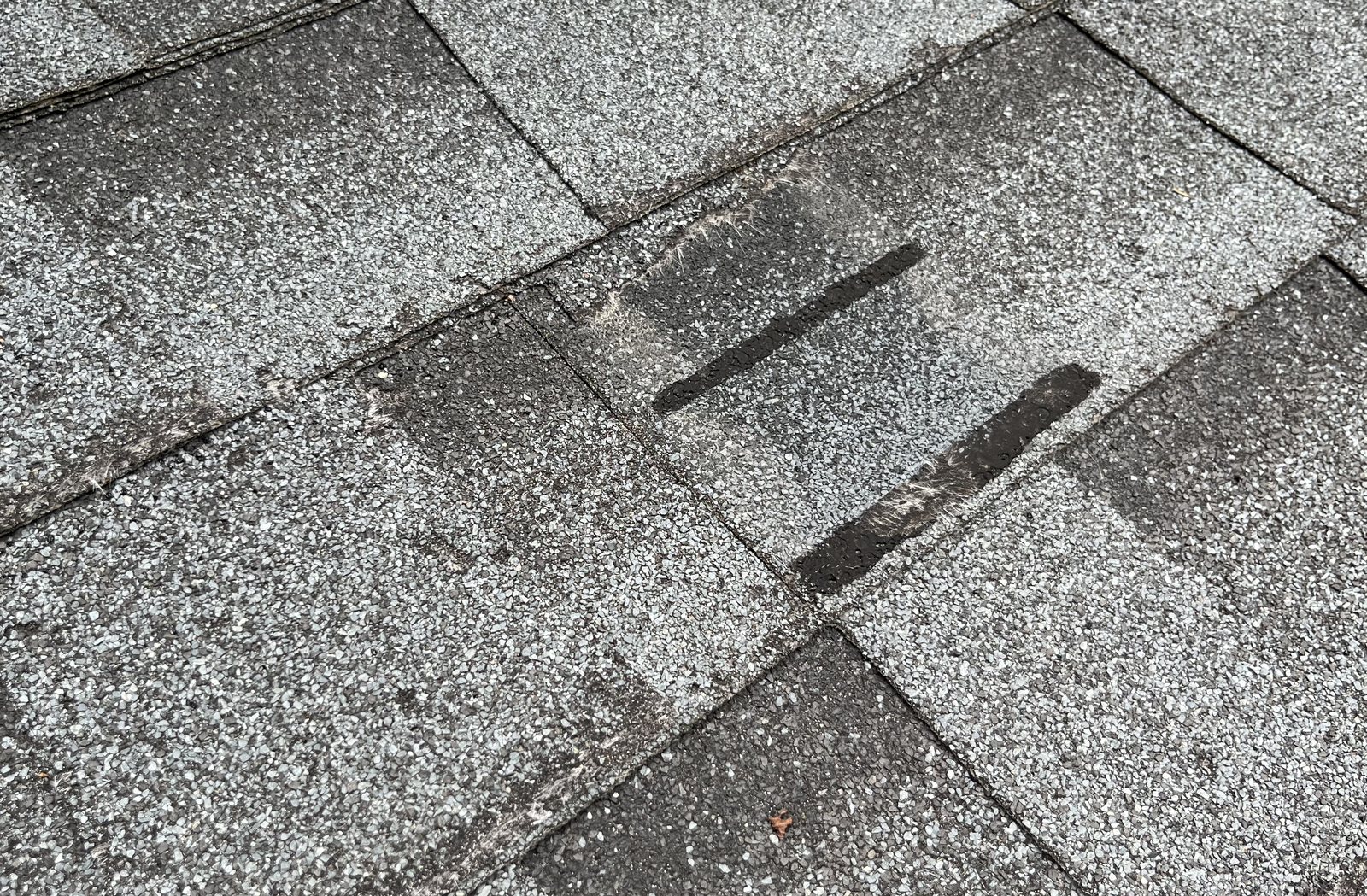
Ice dams are the leak most often misdiagnosed as a roof failure in Wisconsin. Replacing the shingles will not stop them. Sealing air leaks into the attic, adding insulation and balancing intake and exhaust ventilation will. A contractor who quotes a new roof for ice dams without going into your attic has not diagnosed anything.
A valley homeowner is often told the tile needs replacing when the tile is fine and the underlayment beneath it has failed. Tile can last fifty years or more. The felt under it does not. Anyone quoting new tile without lifting a section to look at what is underneath has not diagnosed anything.
Repair or replace
The honest test is not the age of the roof, it is the condition of three things.
- The deck. If the sheathing is sound, a repair has something to fasten to. If it is soft in several places, you are patching a failing structure.
- The shingle. Lift a corner. A shingle with life in it flexes. One that cracks is brittle, and any repair will break the shingles around it.
- The pattern. One failure in one place is a repair. Three failures in three unrelated places usually means the roof has reached the end of its service life.
We will tell you which of those you have. We would rather do a $900 repair now and your replacement in four years than sell you a roof today that you did not need.
Common questions
Can my roof be repaired instead of replaced?
Often yes. If the deck is sound, the shingles still have flexibility and the failure is localized, a repair can buy years. If the shingles are brittle, granules are gone across the whole field, or there are multiple failures in different places, repairs stop being economic.
Why is the leak not above the stain on my ceiling?
Water travels. It enters at an opening, runs along the underside of the deck or down a rafter, and drops at the first low point it finds. That can be several feet from the entry. This is why chasing the stain rather than the path usually fails.
How long should a repair last?
A correctly identified and properly detailed repair should last as long as the surrounding roof. A repair that only seals the symptom typically fails at the next freeze and thaw cycle.
Do you charge for the inspection?
No. The inspection and the written assessment cost nothing, and you keep the photographs whether or not you hire us.
Not sure whether it is a repair or a replacement?
We will look, photograph it, and tell you plainly. The inspection costs nothing either way.