

Storm and hail damage in Greater Milwaukeethe Phoenix valley
What hail actually does to a roof, why the damage is invisible from the ground, and how the claim process really works.
Hail damage rarely looks like damage
Homeowners expect holes. What hail actually leaves is subtle enough that most people conclude their roof is fine, and only discover otherwise when a leak appears two winters later.
| What it is | What it looks like |
|---|---|
| Bruising | A soft dark spot where the granules have been knocked off and the asphalt mat below is exposed. It feels like a bruise on fruit. This is the primary thing an adjuster looks for, and it is essentially invisible from the ground. |
| Granule loss | Granules are the shingle's sunscreen. Once they are gone the mat degrades under UV. A pile of granules at the bottom of a downspout after a storm is a genuine signal. |
| Cracked seals | Wind flexes the shingle and breaks the adhesive strip holding it to the course below. The shingle stays in place until the next storm lifts it. Invisible until it fails. |
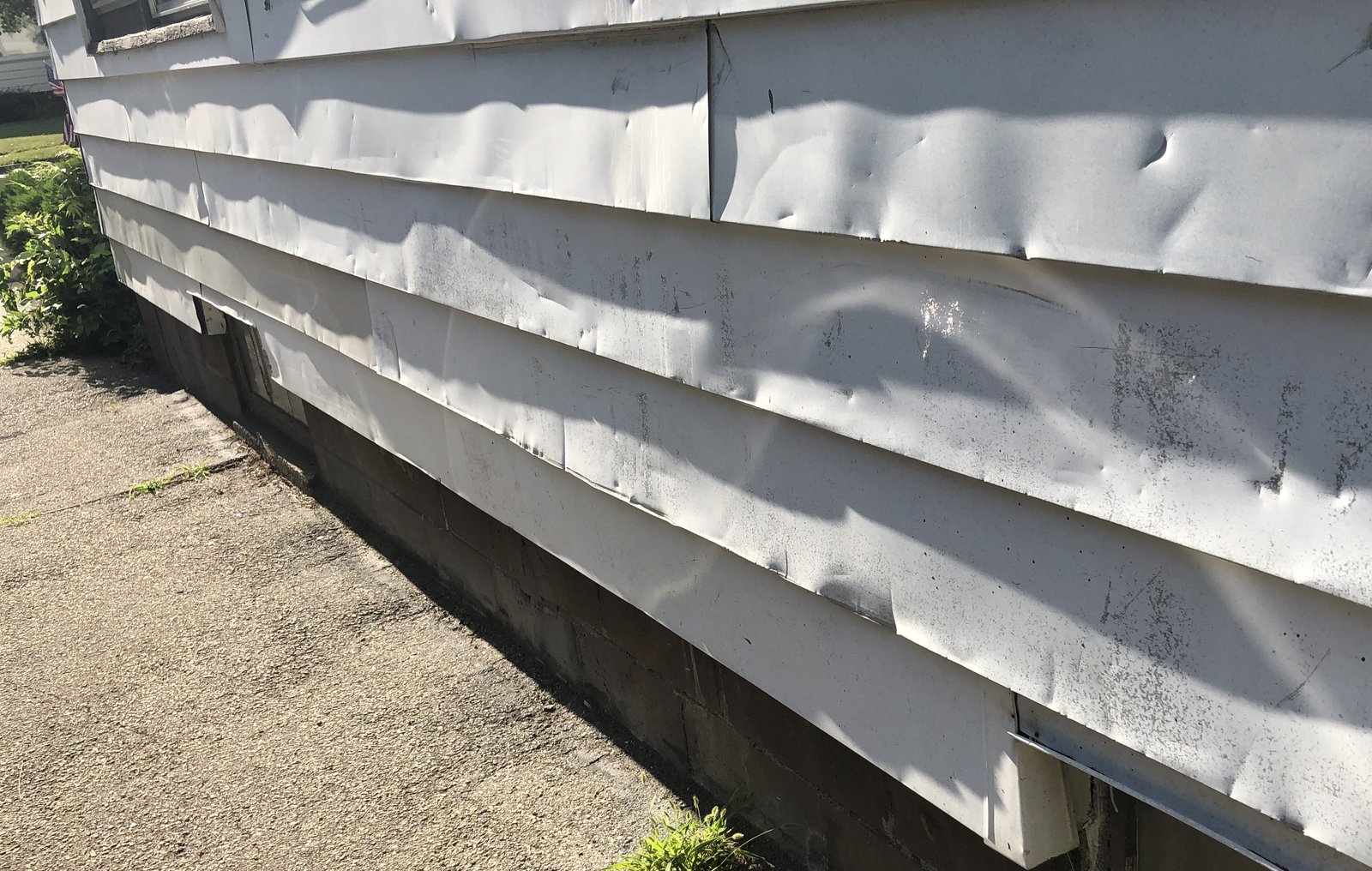
| Soft metal dents | Dents in vents, flashing, gutters and downspouts. These do not usually leak, but they date the storm and corroborate the rest of the claim, which is why an adjuster photographs them. |
| Displaced shingles | The obvious one. Also the least common, and by itself often a repair rather than a claim. |
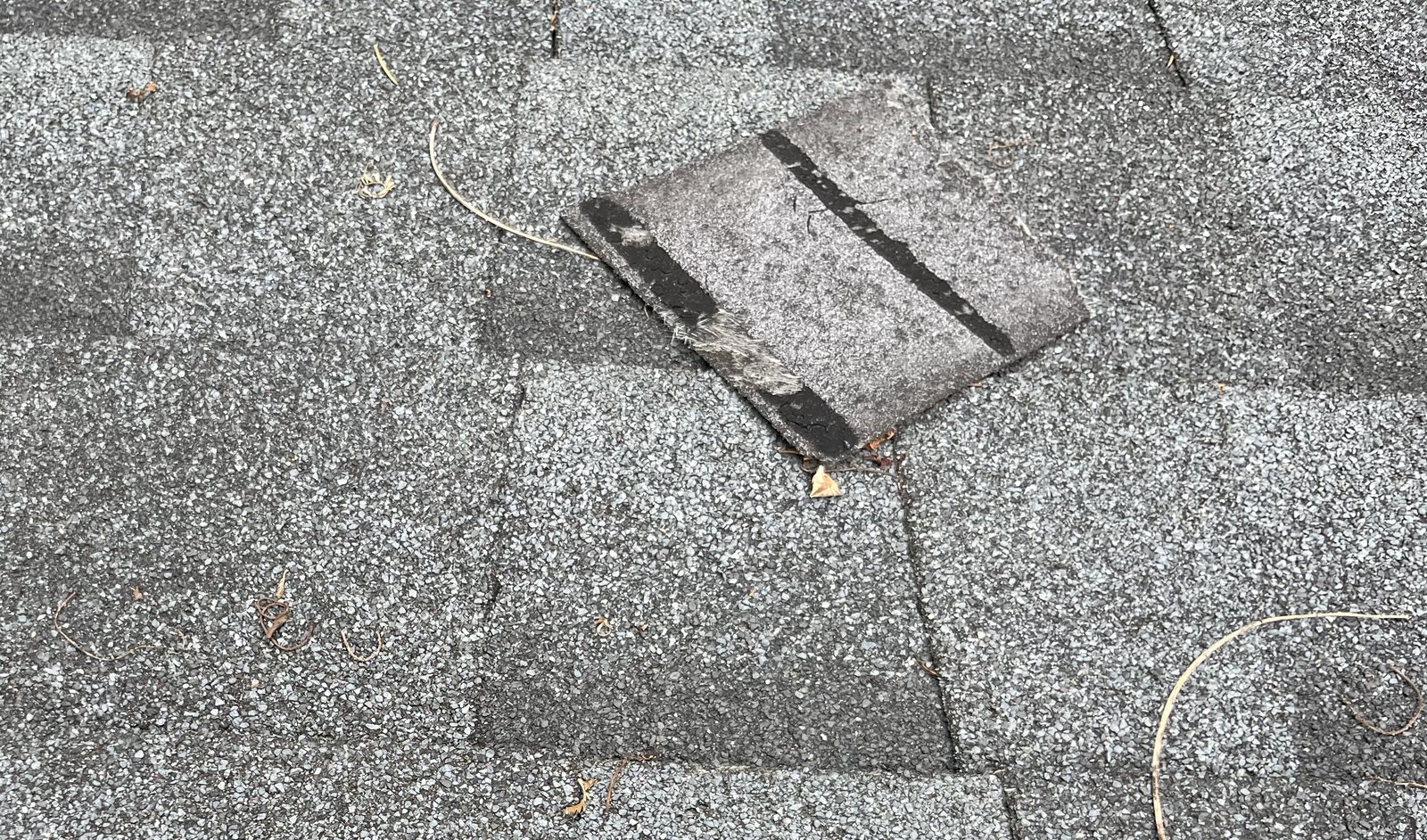
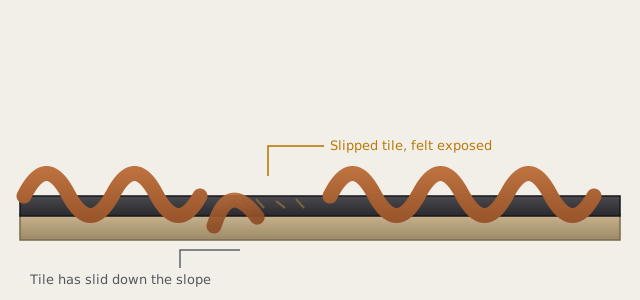
Valley storms arrive as wind and horizontal rain rather than as hail. What they leave is lifted or slipped tile, torn underlayment at exposed edges, debris driven into valleys, and flashing pulled loose. Dust and heat then hide it, so the roof looks untouched from the driveway while water has a path.
Damage is easiest to attribute to a specific storm before another one lands on top of it. It is also easier before the street fills with out of town crews, which is when quality and accountability both drop.
How the claim actually works
1. Get it inspected and photographed
Before you call your insurer, know what you have. We produce a photographed report with the damage located and described in the language adjusters use. It costs nothing and it is yours whether or not you file.
2. Decide whether to file
If the damage is real and above your deductible, filing usually makes sense. If it is cosmetic or marginal, it often does not. We will say which we think it is. Anyone who tells you to file before they have been on the roof is selling, not advising.
3. The adjuster visit
We meet your adjuster on the roof with our own measurements and photographs. Two people looking at the same roof with the same evidence disagree far less than two people describing it from memory.
4. Supplements
First scopes frequently miss work the roof genuinely needs: ridge vent, drip edge, ice and water shield to code, or steep and high charges. Where that happens we supplement in writing with measurements and photographs attached, which is a normal part of the process, not a fight.
5. The work
You pay your deductible. We do not offer to cover, waive or absorb it, because that is insurance fraud in both states and any contractor who offers it is telling you what they are willing to do to your insurer and, eventually, to you.
Emergency tarping
If water is coming in now, the first job is to stop it. We tarp the same day where we can reach you, and tarping is documented as part of the claim. Call 414.436.5036 rather than filling in a form if the roof is open.
Common questions
Should I file a claim for every storm?
No. If the damage is cosmetic or below your deductible, filing can cost you more than it returns. We will tell you honestly what we see before you call your insurer, and you keep the report either way.
How long do I have to file?
Most policies require prompt notice, and many carriers apply a one or two year limit from the date of loss. The practical problem is different: the longer you wait, the harder it becomes to prove which storm caused the damage.
Will my premium go up if I file?
A weather claim is generally treated differently from an at-fault claim, but policies vary and we are not licensed to advise on your coverage. Ask your agent directly before you file.
Do you do free inspections after a storm?
Yes, and same day where we can. You get a photographed report whether or not you file, and whether or not you use us for the work.
Storm through last night?
Call us and we will get eyes on it. The inspection and the photo report are free whether or not you file.